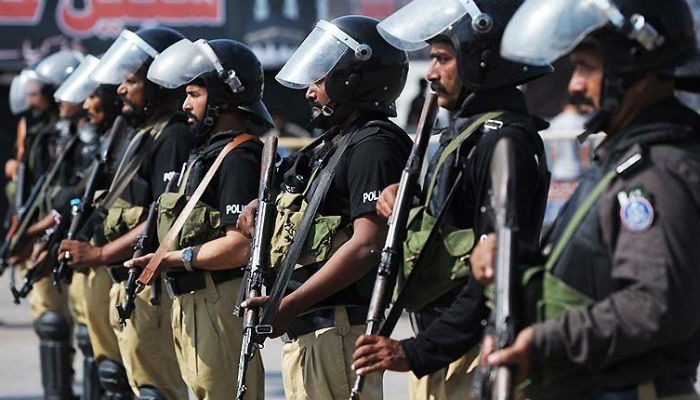
![Chhattisgarh police killed 14 Naxalites, including a leader with ₹1 crore bounty, raising concerns over state violence and authoritarianism. [Image via South China Morning Post]](https://southasiatimes.org/wp-content/uploads/2025/01/62093344-75a6-11e6-800a-ae97f003174d_1280x720.webp)
At least 14 Naxalites were killed in an encounter with Chhattisgarh police near the Chhattisgarh-Odisha border on January 21, 2025. Among those killed was a high-profile Naxalite leader, who had a bounty of ₹1 crore on his head. The clash, which occurred early in the morning, involved a Border Security Force (BSF) road-opening party.
The police reported that the operation is still ongoing, and more details are awaited. This significant success is being hailed by Indian security forces, with Union Home Minister Amit Shah stating on social media that “Naxalism is breathing its last today.” Shah’s statement highlighted the joint efforts of the Central Reserve Police Force (CRPF), Special Operations Group (SoG) Odisha, and Chhattisgarh Police in neutralizing the Naxalite threat.
This operation comes after a series of violent incidents in the region, including the injury of two BSF jawans on January 17 when Naxalites triggered an improvised explosive device (IED) in Narayanpur district.
Also See: Amit Shah’s Vision for India’s Anti-Naxal Operations: A Divided Legacy
Naxalism and the Growing Concern of Authoritarianism
While the Chhattisgarh police’s success in the encounter is seen as a blow to Naxalism, it raises deeper questions about the nature of state violence in India. Critics argue that such incidents reflect a broader trend of increasing authoritarianism in the country, where dissent, particularly from marginalized communities, is often met with forceful repression.
A growing number of voices believe that the Indian government’s response to insurgency and dissent, particularly within tribal regions, exemplifies a pattern of brutality aimed at stifling opposition. As security forces continue their operations in the region, including the neutralization of Naxalite figures, there are concerns that the government’s strategy disproportionately targets vulnerable minorities and activists critical of state policies.
From the North East to Kashmir, there are increasing reports of government policies undermining democratic freedoms, often under the guise of national security.
Also, the government’s handling of the Naxalite insurgency also raises alarms about India’s commitment to democracy. Prime Minister Narendra Modi’s Bharatiya Janata Party (BJP) and the Rashtriya Swayamsevak Sangh (RSS) frequently emphasize the importance of democracy and national unity, yet their actions tell a different story—one where state violence is justified to curb dissent and maintain control.
Many human rights organizations have expressed concern that the ongoing suppression of Naxalites, often resulting in civilian casualties, is a direct attack on the fundamental rights of minorities and marginalized communities. The Naxalites, originally a revolutionary force advocating for the rights of tribals and rural populations, have become a symbol of resistance against perceived oppression. In the eyes of some, the government’s actions are not only about combating insurgency but about stifling any form of opposition.
As India presses forward in its war against insurgency, the world must not ignore the rising oppression under the guise of security. The crackdown on Naxalites may be celebrated by some, but the ongoing human rights abuses in the country demand global scrutiny. For many, the question remains whether India’s commitment to democracy can withstand the growing authoritarianism that defines its internal security strategies.
The situation underscores the importance of recognizing the broader implications of such state actions, as they have the potential to shape India’s future political landscape in ways that challenge the very tenets of democratic governance.
This news is sourced from Live Mint and is intended for informational purposes only.

Your trusted source for insightful journalism. Stay informed with our compelling coverage of global affairs, business, technology, and more.