![Pakistan launches a military operation in Balochistan targeting separatist groups amid rising violence and attacks. [Image via Reuters]](https://southasiatimes.org/wp-content/uploads/2024/11/2024-08-27T135207Z_1447228032_RC2BO9AT5EUN_RTRMADP_3_PAKISTAN-ATTACK-1732100915.webp)
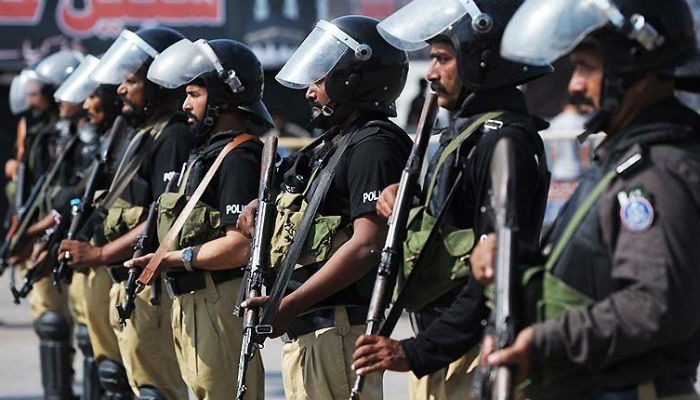
Pakistan has announced a “comprehensive military operation” against separatist groups in the restive southwestern province of Balochistan, which has seen a surge of deadly attacks in recent months.
Prime Minister Shehbaz Sharif led a meeting on Tuesday of political and military leaders, and gave the go-ahead for the operation, his office said in a statement.
Neither Sharif’s office nor the military would divulge details about the operation, or say whether it will include ground or air strikes, or whether parts of it will be conducted in cooperation with China or Iran.
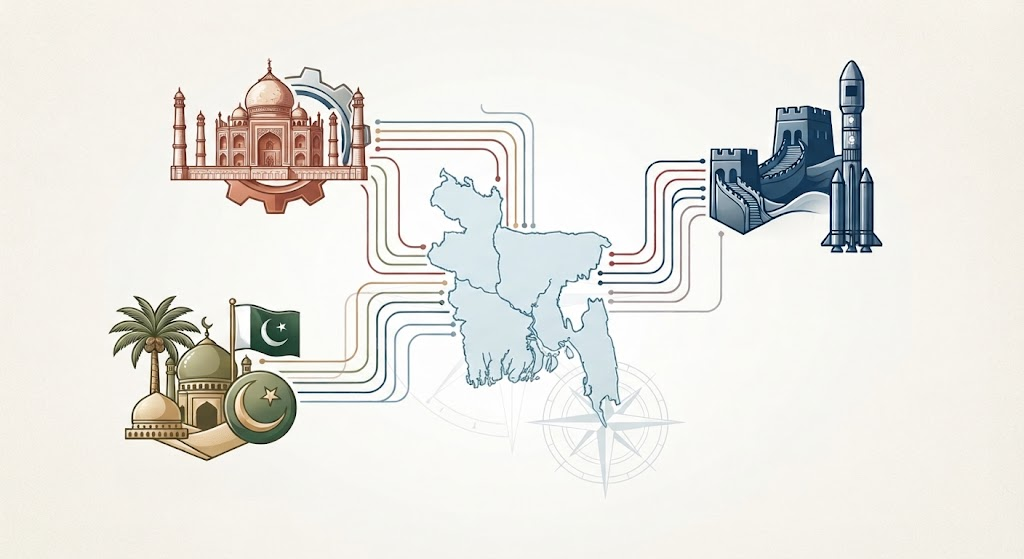
China has been pushing for measures to protect its citizens after they were targeted in a spate of attacks, and on Tuesday unveiled a plan for joint counterterrorism exercises in Pakistan.
Asked on Wednesday if China is involved in Pakistan’s plan, Chinese Ministry of Foreign Affairs spokesperson Lin Jian did not directly comment, only saying Beijing “is willing to deepen pragmatic cooperation” to the benefit of both countries.
Iran has also been carrying out extensive military operations in the southeastern province of Sistan and Baluchestan, which borders Pakistan and Afghanistan, against separatist fighters.
According to Sharif’s office, the military operation will target the Balochistan Liberation Army (BLA) and other outlawed groups, but it is unclear when it will start.
The government blamed the groups for “targeting innocent civilians and foreign nationals to scuttle Pakistan’s economic progress by creating insecurity at the behest of hostile external powers”.
The BLA has long waged an armed rebellion seeking independence from Islamabad. It is the biggest of several ethnic rebel groups battling the government, claiming it unfairly exploits the province’s gas and mineral resources.
On November 9, a suicide bomber with the BLA blew himself up at a crowded train station in Quetta, killing 26 people, including soldiers, police and civilians.
Resource-rich Balochistan, home to numerous armed separatist groups, is the country’s largest and poorest province and borders Afghanistan and Iran.
In the past, armed groups also targeted energy projects with foreign financing – most notably from China – accusing outsiders of exploiting the region while excluding residents from the profits.
Thousands of Chinese nationals work in Pakistan, many of whom are involved in Beijing’s Belt and Road Initiative, a multibillion-dollar infrastructure project.
Also See: A Grim Ten Days: Terrorism’s Resurgence in Pakistan
Attack in Khyber Pakhtunkhwa
The Pakistani military said on Wednesday that 12 soldiers were killed after fighters attacked a base in the mountainous northwestern province of Khyber Pakhtunkhwa.
It said six fighters were killed in the attack, which included ramming an explosives-laden vehicle into the perimeter wall of the military outpost in the district of Bannu.
The Hafiz Gul Bahadur group, a breakaway faction of the Pakistani Taliban, claimed responsibility for the attack.
This brought the number of people killed in armed attacks in the past 24 hours to 20, as eight people died in another attack, also in Khyber Pakhtunkhwa.
The Tehreek-e-Taliban Pakistan (TTP), also known as the Pakistani Taliban, claimed responsibility for that assault.
Iran’s Islamic Revolutionary Guard Corps (IRGC) announced on Wednesday that as part of its large-scale operation in Sistan and Baluchestan, it killed three more armed separatists while arresting 11.
Last month, at the request of Iranian authorities, the Pakistani military launched air strikes on positions held by Jaish al-Adl, the armed separatist group considered an Israeli-backed “terrorist” organisation by Tehran. The attacks killed 12 members, the group said.

Your trusted source for insightful journalism. Stay informed with our compelling coverage of global affairs, business, technology, and more.