
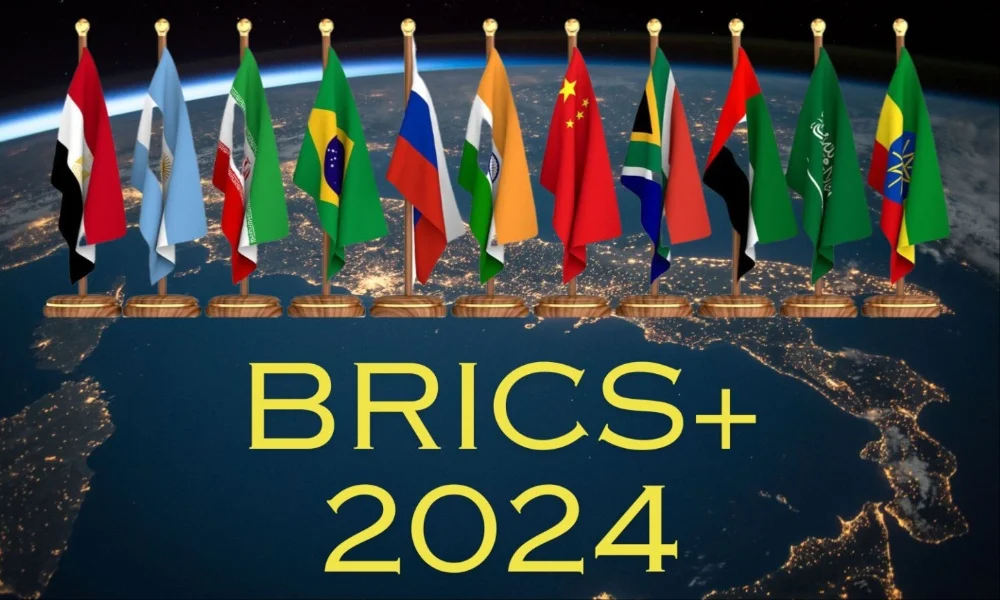
BRICS members call on IEA to lift ban on Afghan girls’ education

BRICS calls on Afghanistan to lift the ban on education for women and girls, urging action for fundamental rights and stability.

BRICS member countries called on the Islamic Emirate of Afghanistan to lift the ban on education for women and girls and to preserve the fundamental rights of all Afghan citizens, including women, girls and ethnic minorities.

According to a joint statement issued by the BRICS nations, more “visible and tangible actions” should be taken by the Islamic Emirate in Afghanistan to ensure that the country’s soil is not used by terrorists.

The member nations stated that they support an Afghanistan free from “terrorist, independent and united” groups, and the Islamic Emirate is asked to take immediate and concrete measures to lift the ban on education and prevent exploitation by terrorists and to address this issue effectively.

These countries also pointed to the effective role of regional meetings with the participation of Afghanistan’s neighboring countries and welcomed the efforts of these countries to facilitate the process of resolving the crisis in the country.

BRICS member countries said they believe that the participation of neighboring countries in the process of solving the Afghan crisis can help stabilize security and stability in the region.

The three-day meeting of the BRICS organization took place this week in Kazan, Russia. 

A number of country leaders, including presidents of China, India, Russia, Turkey, South Africa, Iran, Egypt and Ethiopia attended.

The UN Secretary General Antonio Guterres was also present. 

The summit wraps up on Thursday. 

Also See: BRICS Membership: Pakistan’s Economic Leap

This news is sourced from Ariana News and is intended for informational purposes only.

News Desk

Your trusted source for insightful journalism. Stay informed with our compelling coverage of global affairs, business, technology, and more.
Recent

A fact-based rebuttal of claims about Pakistani troop deployment in Gaza, exposing disinformation and reaffirming Pakistan’s UN-mandated peacekeeping doctrine.

Debunking the Gaza Deployment Narrative

False claims of a Pakistani troop deployment to Gaza, amplified by disinformation networks, were firmly rejected by the Foreign Office, reaffirming that Pakistan’s military operates only under UN mandates and constitutional limits.

Read More »
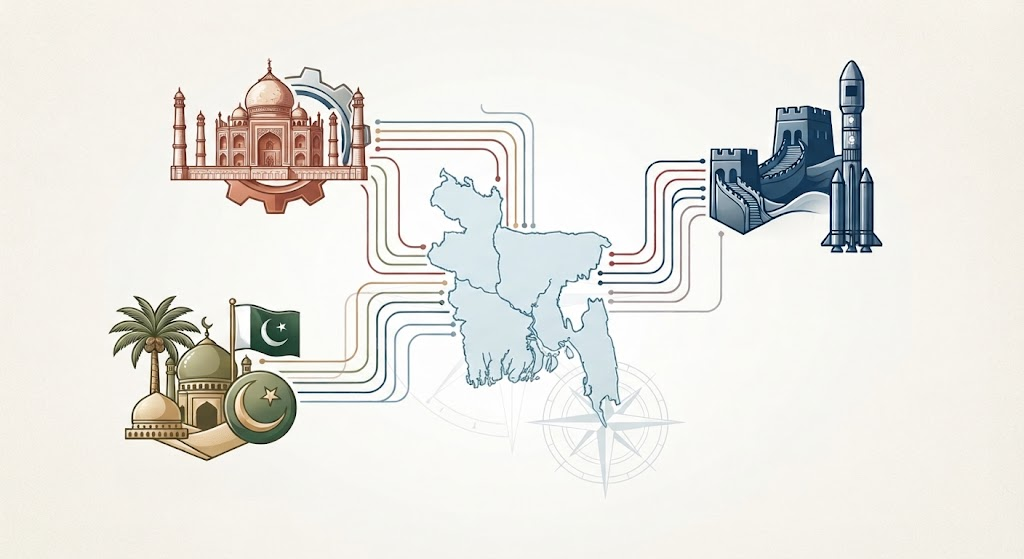
The death of Sharif Osman Hadi marks the collapse of the 1971 Consensus, reshaping Bangladesh’s identity and triggering a strategic crisis for India.

The End of the 1971 Consensus

Sharif Osman Hadi’s death has become the symbolic burial of the 1971 Consensus that long structured India–Bangladesh relations. For a generation with no lived memory of the Liberation War, Hadi embodies a Second Independence, reframing 1971 as the start of Indian dominance rather than true sovereignty. His killing has accelerated Bangladesh’s rupture with India and exposed a deep strategic crisis across South Asia.

Read More »
Afghanistan’s Taliban uses pharmaceutical policy to assert autonomy, decouple from Pakistan, and expand strategic ties with India.

Afghan Taliban’s Biopolitics

The Taliban’s health diplomacy is reshaping Afghanistan’s geopolitical landscape. By phasing out Pakistani pharmaceuticals and inviting Indian partnerships, Kabul securitizes its healthcare infrastructure as a tool of strategic realignment. The shift highlights the intersection of sovereignty, economic statecraft, and regional influence, with Afghan patients bearing the immediate consequences.

Read More »
Islamophobia after violent attacks fuels polarization, legitimizes collective blame, and undermines security while strengthening extremist narratives.

Who Benefits from Islamophobia?

In the wake of global violence, political actors often replace evidence-based analysis with collective blame. Islamophobia, when elevated from fringe rhetoric to state discourse, fractures society and weakens security.

Read More »