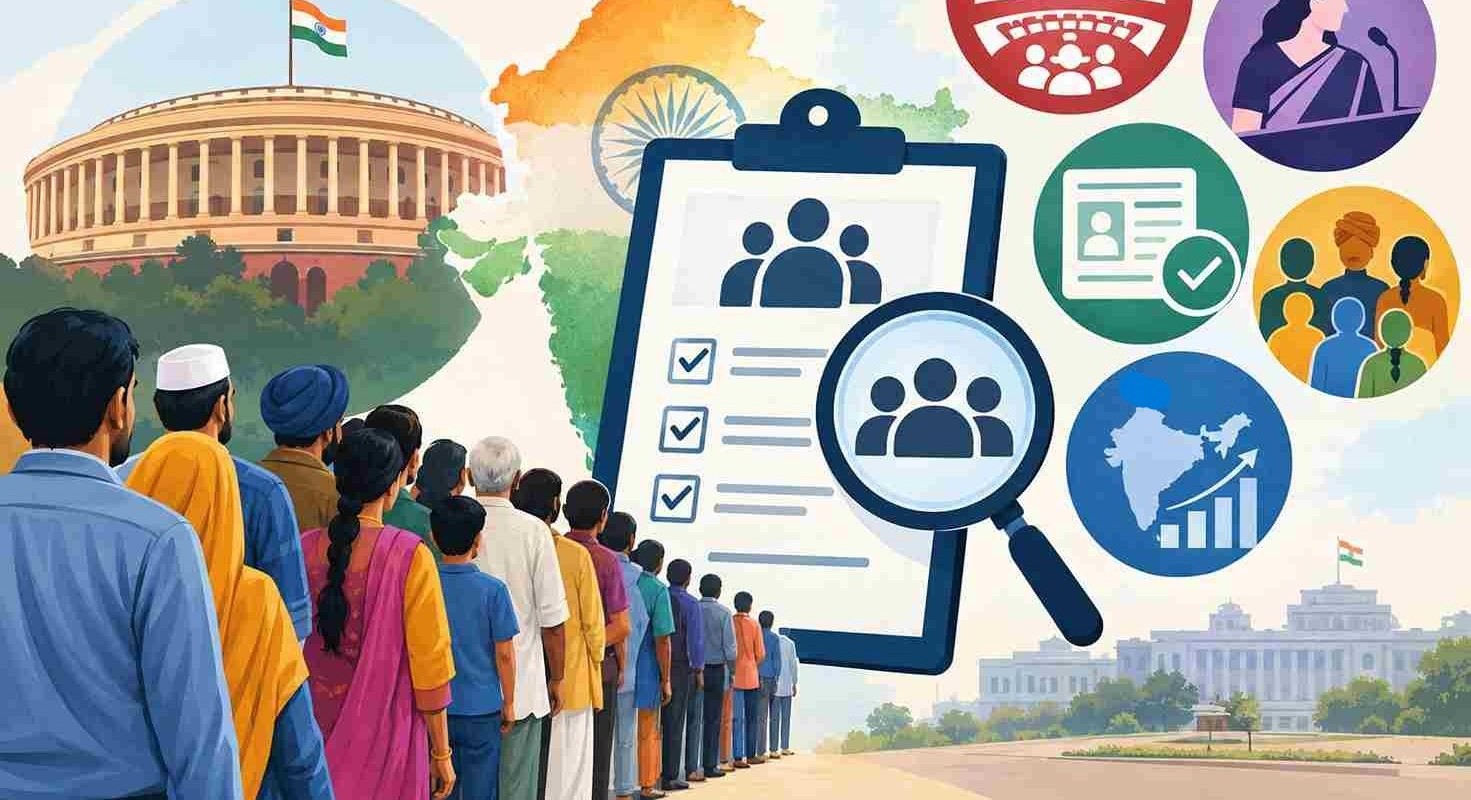
At the BJP headquarters, Modi addressed his supporters amidst a wave of jubilation, declaring, “Today’s victory is the victory of the world’s largest democracy,” and emphasizing the “immense faith” Indian voters had shown in his party and the NDA coalition. Meanwhile, the opposition Indian National Developmental Inclusive Alliance (I.N.D.I.A.), led by the Indian National Congress, won 232 seats, reflecting a highly competitive election that reshaped India’s political landscape.
Let’s look at the key areas where BJP lost its majority:
Uttar Pradesh
In Uttar Pradesh, a traditional BJP stronghold, saw a fierce battle between the NDA and I.N.D.I.A. The NDA secured 36 seats while I.N.D.I.A. took 43 seats, with the Samajwadi Party winning 37. Compared to 2019’s 62 seats, this marks a significant shift. Rahul Gandhi secured a massive win in Rae Bareli, with Congress reclaiming Amethi and Rae Bareli.
Punjab
In Punjab, the political arena was intense, with the I.N.D.I.A. alliance’s Aam Aadmi Party (AAP) and Congress vying for dominance. Congress secured 7 seats, AAP 3, and Shiromani Akali Dal (SAD) 1 independently. Notably, independent candidates, including Sarabjeet Singh Khalsa, son of Indira Gandhi’s assassin, and Amritpal Singh, a pro-Khalistan separatist, made significant wins. However, BJP could not secure a single seat.
Maharashtra
In Maharashtra, the state’s electoral dynamics witnessed shifts, with the I.N.D.I.A. alliance clinching 30 seats (Congress 13, Shiv Sena 9, Nationalist Congress Party (Sharadchandra Pawar) NCP 8) and the NDA securing 17 seats (BJP 9, Shiv Sena 7, Nationalist Congress Party (NCP) 1). In 2019, BJP had won 23 seats and the Shiv Sena (pre-split) 18. Splits within Shiv Sena and NCP significantly reshaped the political landscape.
Tamil Nadu
In Tamil Nadu, the I.N.D.I.A. alliance dominated, winning 38 seats (Dravida Munnetra Kazhagam (DMK) 22, Congress 9), while the BJP failed to secure any seats. The DMK-led alliance’s clear dominance underscored voter preference for regional parties.
Jharkhand
In Jharkhand, the BJP won 8 seats, Jharkhand Mukti Morcha (I.N.D.I.A.) secured 3, Congress 2, and All Jharkhand Students Union Party (AJSU) (NDA) 1. Compared to 2019, the BJP lost 3 seats and Congress gained 1.
Bihar
In Bihar, Janata Dal (NDA) and BJP each won 12 seats, while the Rashtriya Janata Dal (I.N.D.I.A.) secured 4 and Congress 3. The BJP lost 5 seats, and Congress gained 2 compared to 2019.
Haryana
In Haryana, both the BJP and Congress won 5 seats each. The BJP lost 5 seats, and Congress gained 5 compared to 2019.
West Bengal
In West Bengal the All India Trinamool Congress (I.N.D.I.A.) won 29 seats, while the BJP secured 12 and Congress 1. This highlights the dominance of the I.N.D.I.A. alliance in the state.
Regionally speaking, the breakdown makes for a difficult reading for BJP.
North India
In North India, the BJP experienced losses in UP, Punjab, and Haryana amid rising communal tensions. The Congress-I.N.D.I.A. alliance gained in Rajasthan and Punjab, with regional parties like the Samajwadi Party gaining strength in UP and AAP in Punjab.
West India
In West India, internal conflicts led to setbacks for the BJP-NDA in Maharashtra. The Congress-I.N.D.I.A. alliance gained ground, with the Shiv Sena split impacting NDA’s performance. Rising communal tensions and economic dissatisfaction contributed to BJP’s losses.
East India
In East India, The BJP struggled in West Bengal, securing fewer seats. The Congress-I.N.D.I.A. alliance faced challenges against the dominant TMC, which focused on local governance and anti-BJP sentiment.
South India
In South India, the BJP saw gains in Karnataka under the NDA, securing 1 seat in Kerala. The Congress-I.N.D.I.A. alliance maintained its ground in Kerala, with the DMK dominating Tamil Nadu. Regional party alliances significantly influenced outcomes, reflecting the region’s diverse political landscape.
Also See: India at G20: Is the Glitter Just Surface Deep?
Implications
The broader implications of this are apparent. The election results have left India at a crossroads, with a hung parliament potentially leading to an inward focus. This shift could reshape domestic policies and significantly impact its foreign affairs strategy. The Congress-I.N.D.I.A. alliance’s gains by addressing pressing domestic issues signal a change on the horizon.
However, amidst this political flux, there is a troubling possibility: could the BJP resort to orchestrating another Gujarat-style massacre or a Pulwama-like event to sway public sentiment, as seen in 2019? Such divisive tactics have proven effective in the past.
For Pakistan, these developments are alarming, especially given recent statements regarding Azad Jammu and Kashmir (AJK). Regional tensions are simmering, with renewed concerns about Indian terrorism in Pakistan and diplomatic spats with neighboring countries like the Maldives and Sri Lanka. India’s involvement in transnational killings in Canada and Pakistan, and assassination attempts in the United States casts doubt on its international conduct and security apparatus.
The Future Going Forwards
In the aftermath of these polls, India’s trajectory poses crucial questions for the region and the globe. As the world’s largest democracy navigates this new chapter, how will it balance internal priorities with global ambitions? What threats does this new India pose to regional stability and global security? The implications will reverberate far beyond its borders, shaping the geopolitical landscape for years to come.
As dawn breaks on this new era, the world watches closely, waiting to see how India, with its rich tapestry of cultural and political diversity, will chart its course in the years ahead. The stakes are high, and the journey promises to be as complex and vibrant as the nation itself. Finding a careful balance between security and the needs of citizens is essential.
The article was originally published by The Nation. The views expressed in this article are the author’s own and do not necessarily reflect the editorial policy of the South Asia Times.